


YM LEMY Corporate R&D Center
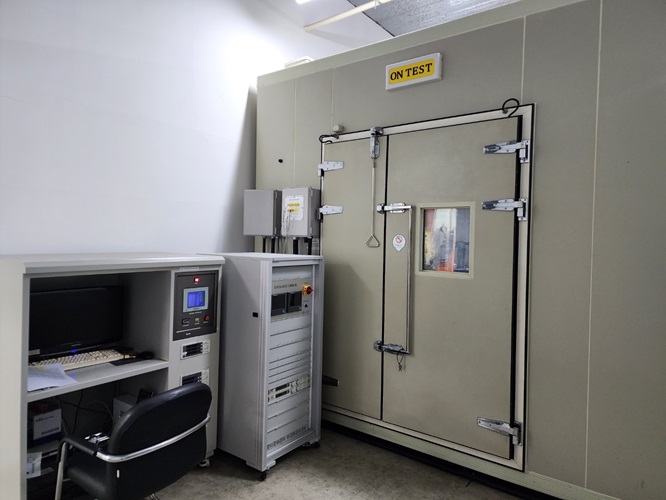
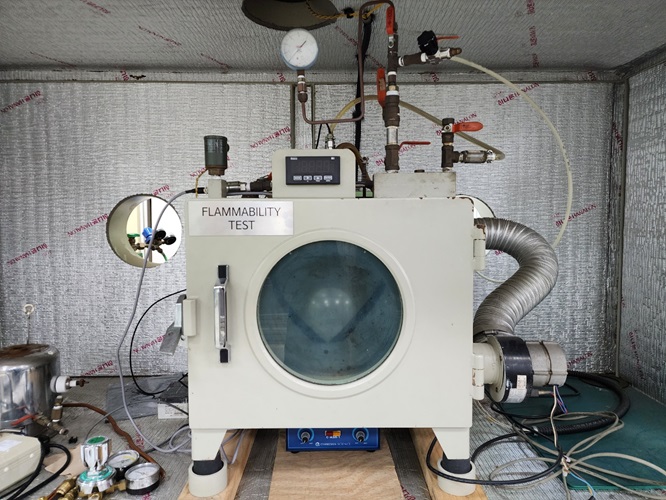
The YM LEMY Corporate R&D Center is equipped to support ASHRAE refrigerant designation and standard-approval procedures, including:
- Thermal and physical property testing for refrigerants
- Cooling and heating performance testing
- Flammability testing (LFL, BV, and HOC)
- Toxicity testing
- Safety Data Sheet (SDS/MSDS) preparation
- Consulting and administrative support for ASHRAE refrigerant designation applications
Research Facilities
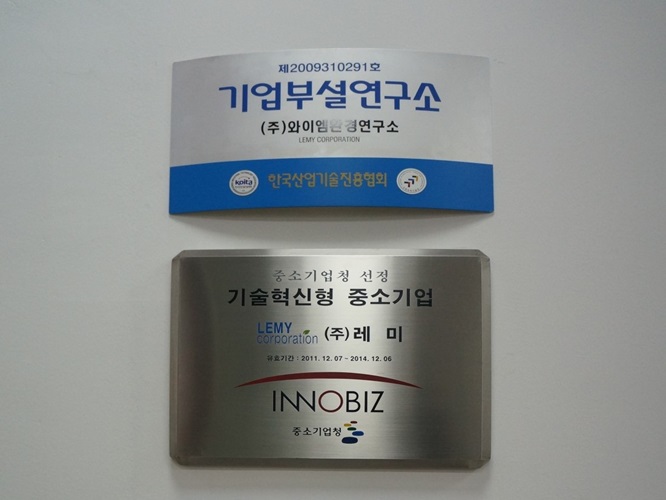
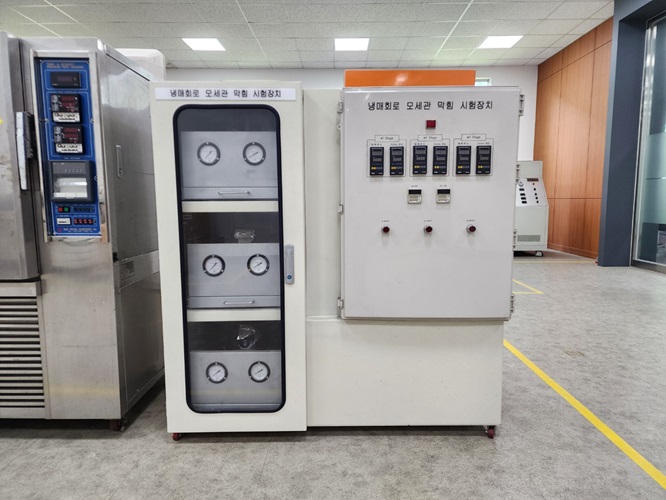
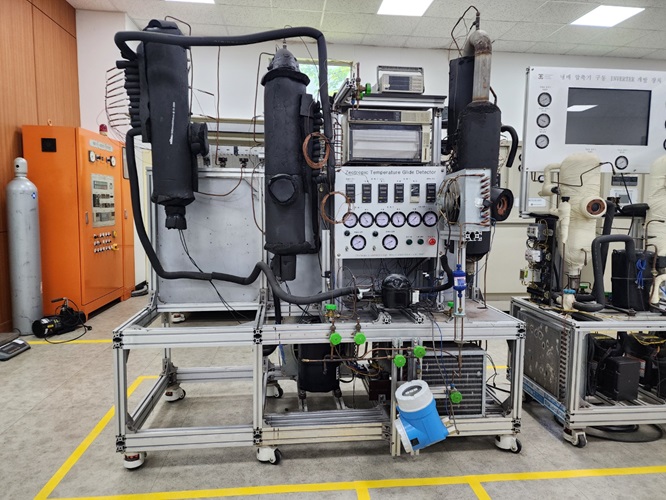
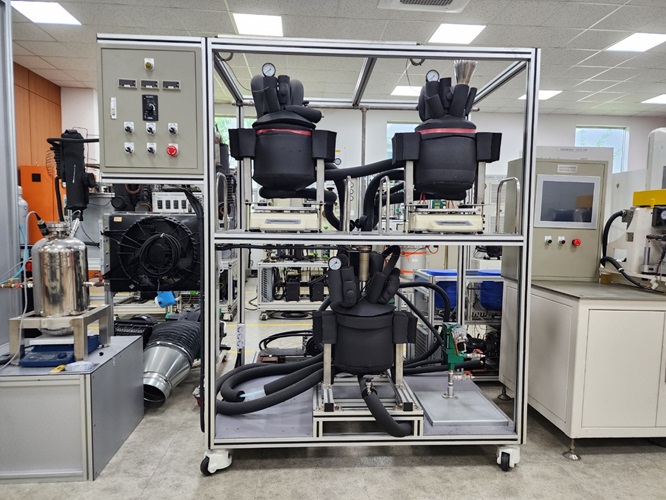
Refrigerant Regulations Related to Global Warming
R-12, once widely used as a refrigerant, was classified as an ozone-depleting substance under the Montreal Protocol in 1987, and its production and use were phased out globally. R-134a was subsequently introduced, but regulations have also tightened because of its global warming impact. In Europe, R-134a was restricted in new vehicle platforms beginning in 2011 and in newly registered vehicles beginning in 2017. As a result, lower-impact alternatives—including CO2, R-1234yf, and eco-friendly refrigerant blends developed by YM LEMY—have emerged as next-generation solutions.
YM LEMY Alternative Refrigerants and Technology
YM LEMY developed Lemy 12 (M-R12) as an alternative to ozone-depleting R-12. Since 2003, more than one million cans have been sold in Japan, and the product has received OEM service-part registration from Toyota and GM.
As demand grew for next-generation alternatives to R-134a, YM LEMY developed Lemy ®1234 and obtained the ASHRAE designation R-440A. The company also developed Lemy ®134, an eco-friendly and cost-effective drop-in alternative to R-134a, and obtained the ASHRAE designation R-512A. Sales have begun in aftermarket service channels in Japan, Southeast Asia, and Latin America.
YM LEMY is also developing hydrocarbon-based refrigerant blends to improve heating performance in electric vehicles and next-generation refrigerants to improve the efficiency of variable refrigerant flow (VRF) systems.
For home-appliance and industrial applications, YM LEMY developed Lemy 22plus as an alternative to R-22, which is being phased down globally because of its ozone depletion potential. The company has also developed low-temperature refrigerant blends to replace R-23 in cascade refrigeration systems.